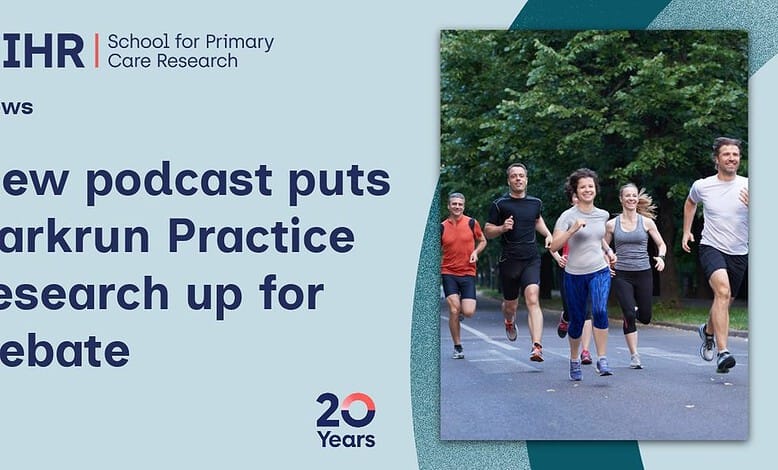


A person’s first question about a running activity may have nothing to do with pace. They may want to know whether they will fit in, whether walking is welcome or whom to speak to when they arrive.
Research opens a wider conversation
The NIHR School for Primary Care Research has highlighted a five-part podcast developed by University of Exeter researchers about the parkrun Practice Initiative. The series explores implementation, inclusion and the practical relationship between primary care and community activity. The initiative links GP practices with local parkrun events and has grown to involve more than 2,000 practices, according to the announcement.




The podcast discusses research and delivery. It should not be treated as evidence that a single activity produces the same health result for everyone.
Running Insights analysis: answer the first question
For a local running organisation, a useful exercise would be to read its joining information as a newcomer. Is the meeting point clear? Does the description explain who the activity is intended for? Is there a named contact for someone who is unsure?
Experienced members may no longer notice that basic information is missing. Asking a recent joiner to identify the confusing moments could reveal more than rewriting a page from the committee’s perspective.
Make the welcome a role
A club could designate someone to greet newcomers, explain the format and introduce the person leading the session. The role should be dependable rather than left to whoever happens to notice a new face.
That does not require a complicated system. A short briefing for volunteers, with a clear route for questions they cannot answer, could make the first visit easier to manage. Different activities will need their own arrangements and appropriate leadership.
Keep partnerships appropriate
Retailers and brands supporting community running should ask what the organiser needs before proposing an activation. An information resource or practical support may be more useful than a product-led presentation.
Participation should not depend on buying equipment from a sponsor. Clear boundaries help preserve trust between the organiser, participants and any commercial partner. Partners should also respect the community’s control over how it is represented.
Look at who returns
An organisation could review whether first-time visitors come back and invite feedback on the welcome. It should be possible to answer without feeling judged for not returning.
Some people will prefer another activity or decide the timing does not work. Understanding that is still useful. A more accessible invitation starts with listening to what a person needs, then explaining honestly what the organisation can offer.
Image: NIHR School for Primary Care Research.
Sources