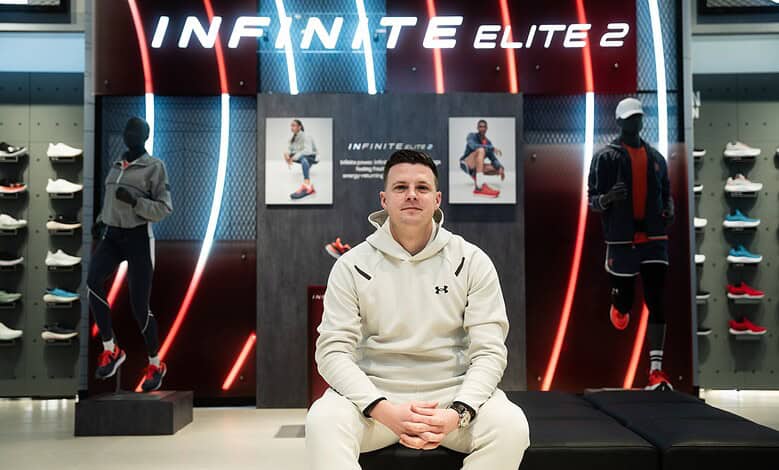



The Senior Product Line Manager for Performance Run Footwear on run crews, what runners actually want, and building the next Velociti.
Key takeaways
- Run clubs, not racing, are pulling the newest generation into the sport — and they arrive with every level of experience.
- Great product is table stakes now. Runners are too well informed to be sold buzzwords.
- Elite athlete testing feeds directly into consumer shoes, including the Velociti Elite 3.
- Under Armour’s strategy is “simplify to amplify” — fewer products, deeper innovation.
Jonathan Hutnyan builds Under Armour’s performance running line. That means he sits in the middle of the most crowded category in sportswear. He decides what gets made, what gets cut, and what runners will be racing in two seasons from now.

Why running’s boom is really a community story
Q: Running has brought a whole new generation into the sport. What’s driving that surge, and is it changing who the “typical” runner is?
I think the surge has come from a couple of places. From a general participation standpoint, the continued growth of run crews and run clubs has created a really welcoming and approachable entry point to the sport. Maybe people join for fitness, or maybe they eventually move into competition. Others might simply join for the social aspect. Run clubs have always existed. However, this latest wave is rooted in community as much as racing, and that brings in people with all levels of experience.
Secondly, I think we’re seeing more younger runners get involved as exposure to elite-level athletes increases. Professional racing has become more mainstream and accessible to watch. And just as young athletes find inspiration in stars from other sports, running is having a similar moment.
Standing out in the most crowded category in sportswear
Q: Performance running is one of the most competitive categories in sportswear. What does it actually take for an established brand like Under Armour to stand out right now?
It has to be about more than just great product. Our team has built that. But if we’re purely talking about shoes on shelves, it’s an incredibly crowded market. We have to invest in the sport in more ways than product alone. We need to show up where runners are, when it matters most.
It’s really a holistic challenge across the brand — product, marketing, PR and communications all need to come together to tell a compelling story. They must also demonstrate our intent and support for the sport. That’s where you can start to cut through and win with consumers in such a competitive market.
What runners expect now that they didn’t ten years ago
Q: How are this new generation’s expectations of brands and footwear different from those of runners ten years ago?
There’s no patience for lackluster products anymore — great products are simply table stakes. Runners are also more tuned in than ever to footwear and the technology behind it, so you can’t fake innovation.
“Great products are simply table stakes. You can’t fake innovation.”
But expectations now go beyond the product itself. Runners notice how brands show up at major races and how they support the sport at grassroots level. I believe that when runners find a brand they like, they can be incredibly loyal — repeat footwear purchases are the clearest example. The brand needs to show that same loyalty back to the consumer.
From a New York win to the Velociti Elite 3
Q: You work closely with elite athletes. Can you walk us through a specific example of athlete feedback being turned into a tangible change in a performance shoe?
Absolutely. After Sharon Lokedi’s first major marathon win in New York, we brought her into the office for extensive testing with our biomechanics team. That team is brilliant at taking the data and translating it into tangible insights. These can drive product evolution.
She had just won New York in the Velociti Elite 2, while we were working on the Velociti Elite 3. That testing helped shape a lot of the thinking behind the next iteration. It’s about building a genuine competitive edge into the footwear. It is also about giving runners the confidence to stand on the start line knowing their shoes can help them reap the benefits of all the hard work they’ve put in.
Cutting through the buzzwords
Q: There’s a lot of buzzword-heavy marketing in running shoes. How do you separate genuine innovation from noise — and how do runners tell the difference?
I think runners are increasingly doing that themselves. They’re more educated about product than ever. There’s now almost a whole sub-industry dedicated to shoe reviews, testing and dissection.
For us, it comes back to genuine storytelling and communicating really clearly what a product is designed to do, rather than relying on buzzwords. If we can explain the purpose and benefits of a product in a way that resonates with runners, they’re much more likely to understand where it fits into their running. Ultimately, they’ll adopt it.
What footwear tech is doing to training and race times
Q: How are advances in footwear technology changing what athletes can actually achieve on the track, from training loads to race times?
Footwear technology is improving both training and race performance, while also helping athletes sustain their careers. We’re seeing athletes able to take on more significant workloads and recover more quickly. This has changed how they approach training and plan ahead of major racing seasons.
There’s a real protective element to some of these newer technologies that runners are responding incredibly well to. And importantly, the benefits aren’t limited to elite athletes. They’re applicable at every level, right through to someone working towards their first 5K.
Innovation, loyalty and bringing fans closer
Q: Beyond product performance, what role does innovation play in building long-term brand loyalty with runners?
Innovation becomes a vehicle for storytelling. Runners can be incredibly loyal consumers, and if a brand consistently delivers, they’ll often stick with it for the long haul.
Making innovation more visible also demonstrates the future intent of the brand. It gives runners a sense of where you’re heading. Furthermore, it gives them a reason to stay excited about what’s coming next.
Q: What about the impact on fans? How do technological advances make the sport more exciting to watch, not just easier to run?
It brings fans closer to the sport. They have the opportunity to wear the same products their favourite runners compete or train in. This way, they experience some of that technology themselves.
At the same time, as technology advances and performances get faster, every major marathon or Diamond League meet carries the possibility of seeing something record-breaking. That adds another layer of excitement for fans watching the sport.
“Simplify to amplify” — and the road to LA 2028
Q: Looking ahead, what separates Under Armour as the running market continues to evolve — and where is running headed?
We’re getting sharper about what we build and offer. “Simplify to amplify” is the strategy. We’re tightening our overall offering so that we can go deeper on product innovation in the places that matter most.
That’s where we’ll deliver the most value to runners — not by offering more things, but by creating more impactful product experiences. As for where running is headed, I think we’ll see a continued push for race-day innovation, particularly as we move towards the 2028 Olympics. I expect a lot of newness across both road and track racing products over the next year and a half.
“Not by offering more things, but by creating more impactful product experiences.”
The future of track and field
Q: What should the running community expect from your discussion on the future of track and field and middle-distance running alongside Adam Fogg and Navasky Anderson?
The audience will get a really unique combination of athlete and brand perspectives on the sport and the wider market. They’ll hear directly about how Adam and Navasky are pushing themselves every day as athletes. In addition, they will learn how we’re supporting them as a brand.
The future of track and field is incredibly exciting. We’re continuing to see greater investment in the sport, while athletes are delivering in the biggest moments. At Under Armour, we’re fortunate to work with such talented athletes. We also get to play a role in supporting what they’re trying to achieve.