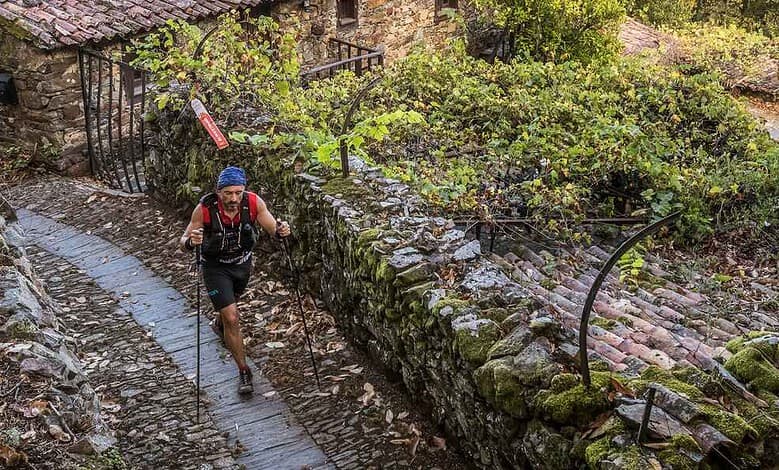


For years, trail running occupied a relatively small corner of the running market. It had its committed followers, its specialist races and a collection of brands that understood the particular demands of running across mountains, woodland and uneven ground. Today, that picture looks rather different. Trail running is becoming a much more important part of the wider running industry, attracting people who might previously have confined their running to roads, pavements and parks. And the latest participation figures suggest this is not simply a passing interest.
Growth that is difficult to ignore
The Outdoor Industry Association’s 2026 Running Report provides a useful indication of the direction of travel. According to its research, trail running participation in the United States reached 17.2 million people in 2025, representing annual growth of 6.6%. More significantly, participation has increased by 57% since 2019. Those are American figures, and it would be wrong to suggest they represent the UK market directly. Nevertheless, they demonstrate the scale of interest in an activity that was once considered relatively specialist. The commercial evidence is equally interesting. In September 2026, Retail Brew reported that trail running was REI’s fastest-growing footwear category, with year-to-date growth of approximately 12% to 19%, depending on the segment. It also reported a substantial increase in trail footwear sales at Brooks. For footwear brands and retailers, these are developments worth examining.




Why are more people heading off-road?
There is no single explanation. Some runners want a break from traffic and busy pavements. Others enjoy the variety of changing terrain or the challenge of climbing hills and negotiating technical ground. For many, trail running provides something that conventional road running cannot always offer: the opportunity to spend time in the countryside without worrying quite so much about pace. A ten-kilometre road run and a ten-kilometre trail run can be completely different experiences. On the road, it is relatively easy to compare times and measure progress. On the trail, elevation, weather, ground conditions and route choice can make those comparisons almost meaningless. That changes the emphasis. The experience becomes as important as the result. It also makes trail running particularly appealing to people who already enjoy hiking, walking and other outdoor activities.
The crossover between running and outdoor retail
This is where the commercial opportunity becomes particularly interesting. Trail running sits between two established retail markets. On one side are specialist running retailers with considerable expertise in footwear, biomechanics and performance. On the other are outdoor retailers with knowledge of mountain environments, technical clothing, navigation and protection from the weather. Neither can afford to ignore the other. A runner moving from roads to trails may initially need nothing more than suitable footwear. As their ambitions develop, however, they may begin looking for hydration packs, waterproof jackets, head torches, poles and navigation equipment. The product requirements can expand considerably. But retailers should be careful not to make the sport appear unnecessarily complicated. Someone running on straightforward woodland paths does not need the same equipment as a competitor tackling a remote mountain ultramarathon. Good advice begins with understanding where the customer actually intends to run.
Footwear remains central
Trail running footwear has developed enormously. There are shoes designed for hard-packed paths, muddy British hillsides, rocky mountain terrain and long-distance events where comfort and stability become increasingly important. For retailers, that creates both an opportunity and a challenge. A customer who asks for a trail running shoe may not understand how dramatically grip, cushioning, fit and protection can vary between models. Selling the most expensive shoe is rarely the right answer. The important questions concern terrain, distance, experience and intended use. A shoe that performs well on dry, compact trails may struggle in deep mud. An aggressive outsole designed for soft ground may feel uncomfortable on long stretches of road. This is precisely the sort of technical advice that gives specialist retailers an advantage over purely transactional online selling.
The brands expanding the market
Established trail specialists such as Salomon, La Sportiva, inov-8 and VJ remain important, while larger running brands including HOKA, Brooks, ASICS and adidas have developed substantial off-road offerings. That competition is helping broaden the market. Consumers are encountering trail products through familiar running brands, while traditional outdoor specialists are reaching audiences that might not previously have considered off-road running. For retailers, the challenge is deciding how much space to allocate to the category. A large trail footwear selection may make sense in a location close to popular running routes. An urban store might benefit more from a carefully selected range of road-to-trail products. There is no universal answer. The strongest buying decisions will reflect local participation rather than simply following national or international trends.
Events can help develop the category
Trail races also have an important role to play. They introduce people to new locations, create communities and encourage runners to progress towards different distances. But the industry should not assume that everyone entering trail running wants to race. Many participants are attracted precisely because the activity offers freedom from structured competition. Retailers and brands can reach these people through guided runs, beginner workshops, route information and partnerships with local outdoor organisations. An introductory trail session that helps someone understand footwear, navigation and basic countryside considerations could be more valuable than an expensive advertising campaign.
Growth brings responsibilities
There is another side to increasing participation. More runners on popular trails can create pressure on paths, parking, local communities and sensitive environments. The running industry has a responsibility to encourage appropriate behaviour. That includes respecting access arrangements, following established routes where necessary, reducing litter and understanding how running activities affect other countryside users. Brands and event organisers have a particular opportunity to support practical environmental initiatives. Trail running depends on access to attractive outdoor spaces. Protecting those spaces should be regarded as a long-term commercial interest as well as an environmental responsibility.
What comes next?
Trail running is unlikely to replace road running, nor does it need to. The two activities complement one another, and many runners will continue moving between them. The bigger opportunity is to recognise that running participation is becoming more varied. People are no longer necessarily identifying themselves as exclusively road runners, trail runners or hikers. They may be all three, depending on the weekend. For retailers, that creates opportunities to sell products across traditional category boundaries. For brands, it creates a wider audience interested in equipment that combines performance, comfort and versatility. And for the running industry, it is another reminder that growth does not always come from persuading existing runners to run faster. Sometimes it comes from encouraging them to explore somewhere new.
Further reading